Usecase: Monitor MCPTT Communications Latency, Service Access Time, Voice Quality Testing

What is MCPTT?
Mission Critical Push To Talk (MCPTT) is the vital service regularly used by first responders around the world to keep in touch quickly. The MCPTT service is delivered over 4G/5G networks and provides conferencing via Push to Talk (PTT). In order to monitor and verify the key performance characteristics of MCPTT service, 3GPP and ETSI have specified four Key Performance Indicators (KPIs).
- End-to-End Access Time : the time between PTT button press and receiving user hearingintelligible voice, i.e., access delay plus M2E latency
- Mouth-to-Ear (M2E) Latency : the time it takes audio to get from transmitting user to receiving user
- Voice Quality/Intelligibility : POLQA scores and voice intelligibility
- Access/Join a call : the ability to establish call and join existing call
Opale systems solution
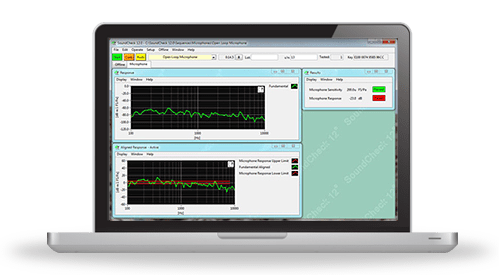
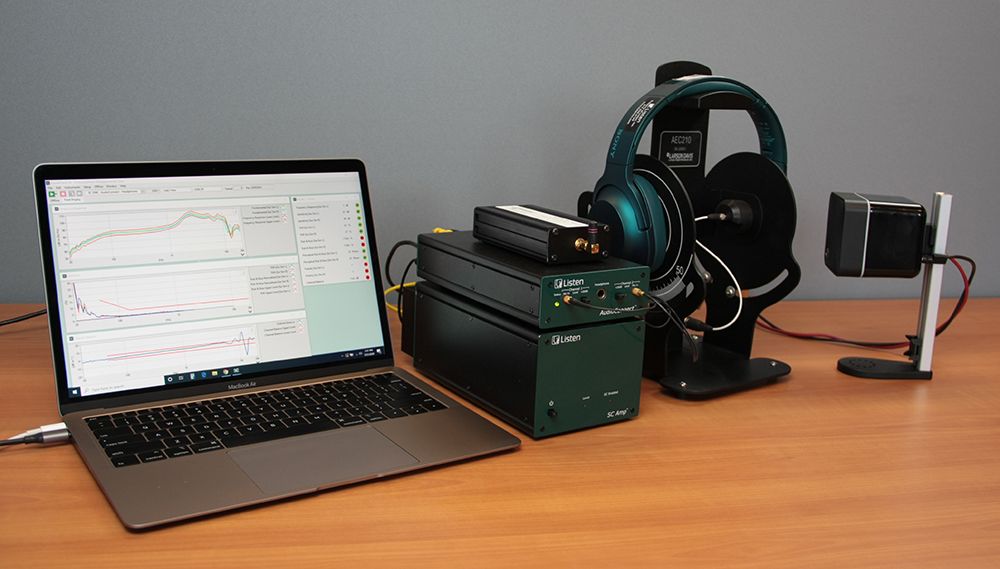
The solution is based on MultiDSLA, a test and measurement product that provides voice quality assessment and global performance of telephony services based on signal analysis.
Opale Systems MultiDSLA is the only system to fully test all 4 x MCPTT metrics defined in 3GPP TS 22.179 M2E Latency and Access Time MCPTT as well as standards based audio quality assessment with PESQ/POLQA.
Opale DSLA provides connectivity with Mobile handset and control on Push-to-Talk button.
The MultiDSLA solution differentiates with : (1) Ability to detect tones of varying frequencies over a dynamic range of 110dB; (2) Ability to connect with and control PTT on all radios and mobile device; (3) Easy test script construction and APIs for integration with any test automation system.
Why measuring MCPTT KPI?
- Check conformity with new equipment in the lab,
- Drive testing with MOS (Mean-Opinion-Score) monitoring,
- Field testing of wireless voice/MCPTT service,
- Monitoring of audio rapid transmission : service latency.
Going further on MCX (Mission Critical Services)
After supporting MCPTT (Mission Critical Push-To-Talk), MultiDSLA extends its capabilities to MCX services, including Mission Critical Video (MCVideo) and Mission Critical Data (MCData). It enables both reference-based and non-reference-based quality assessment for video streams, ensuring comprehensive analysis even when a clean reference signal is unavailable. Additionally, MultiDSLA performs accurate data throughput and latency measurements to validate performance under critical communication scenarios. This ensures full end-to-end testing of mission-critical services across modern LTE and 5G networks.
Features and benefits
- KPI#1 : MCPTT Access time
When the PTT button is pressed, what is the time lag before I should start speaking
- KPI #2 : End-to-end MCPTT Access time
Time between when an MCPTT User requests to speak and when this user gets a signal to start speaking, including MCPTT call establishment
- KPI #3 : Mouth-to-ear latency
This is the one-way delay from speech entering the microphone to emanating from the recipient’s speaker.
- KPI#4 : Late call entry time
Time to enter an ongoing MCPTT Group call measured from the time that a user decides to monitor such an MCPTT Group Call, to the time when the MCPTT UE’s speaker starts to play the audio
- Assess Voice Quality POLQA/NISQA scores
Voice or speech intelligibility rating scale and testing over the full human voice frequency range
- Flexible and Accurate measurements
Generate and accurately detect multi-tones, DTMF, Sel-Cal (Selective Calling/PTT Grant Tones), and voice samples with a dynamic range beyond that of any voice/PTT system
- MCX VIDEO Quality Assessment
Non-Referenced or Referenced Video Call MOS and KPIs

your
local specialist
for