How High-Q Ceramic Filters Help Engineers Overcome GNSS Jamming

As engineers embed receivers for Global Navigation Satellite Systems (GNSS), like GPS and Galileo, into systems ranging from autonomous vehicles to precision agriculture, the RF environment is becoming more crowded, and it’s more difficult to maintain signal integrity.
Such receivers often operate in environments saturated with electronic interference, making them vulnerable to jamming—the intentional or unintentional transmission of radio signals that interfere with GNSS reception. Even low-power jamming can degrade positioning accuracy or completely block signal acquisition.
High-Q ceramic bandpass filters present a technical opportunity to build jamming-resistant GNSS for mission-critical applications.
How Interference Threatens GNSS Signal Integrity
GNSS receivers rely on isolated and amplified satellite signals, starting at about -130 dBm. In congested RF environments, adjacent-band signals and deliberate jamming can easily overpower these weak inputs.
Bandpass filters play a critical role in mitigating GNSS jamming by isolating legitimate satellite signals from interference. These filters are designed to allow frequencies within the GNSS operational bands (e.g., GPS L1/L2, Galileo E1/E5) while attenuating out-of-band noise and intentional jamming signals.
With their low cost and compact form factor, Surface Acoustic Wave (SAW) filters are a natural fit for GNSS receivers, but they struggle in high-interference conditions due to limited out-of-band rejection and broader skirts.
While SAW filters continue to meet performance requirements for consumer devices and systems, high-Q ceramic filters offer a robust upgrade for mission critical applications needing mechanical and thermal stability, predictable tuning characteristics, and long-term reliability.
Why Q Factor Matters in GNSS Filtering
Q factor is used as shorthand figure of merit (FOM) for RF filters. In short, Q factor is expressed as the ratio of stored versus lost energy per oscillation cycle. It describes specifications like the steepness of skirts (i.e., the selectivity) and insertion loss. Overall, losses through a resonator increase as Q factor decrease and will increase more rapidly with frequency for lower values of resonator Q.
Knowles’ high-Q ceramic filters outperform many alternatives by offering:
- Sharper Skirts: Enable precise filtering near the band edges.
- High Rejection: Attenuates out-of-band signals and jammers.
- Low Insertion Loss: Preserves the integrity of weak GNSS signals.
These attributes are especially important in military and aerospace platforms where GNSS must function reliably in the face of hostile electronic countermeasures. High-Q ceramic filters enable precise frequency discrimination, ensuring that only legitimate GNSS signals reach the receiver.
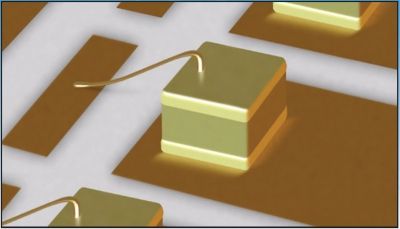
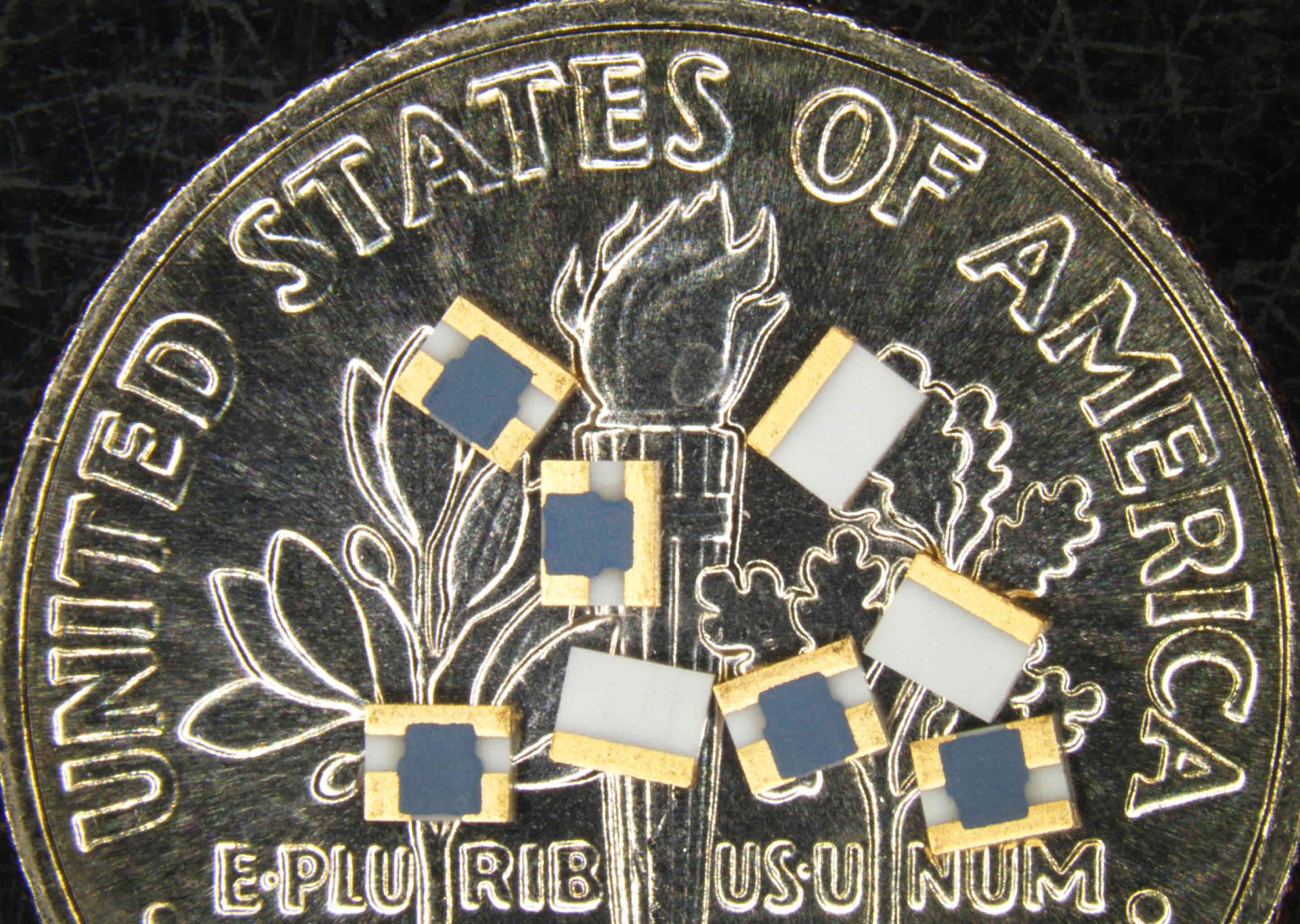
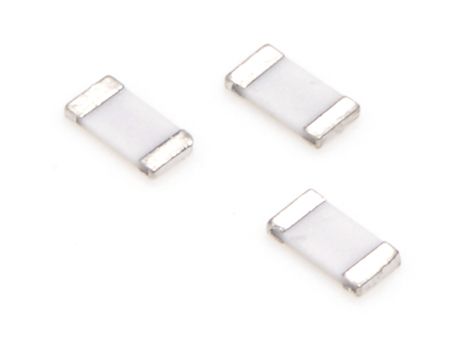
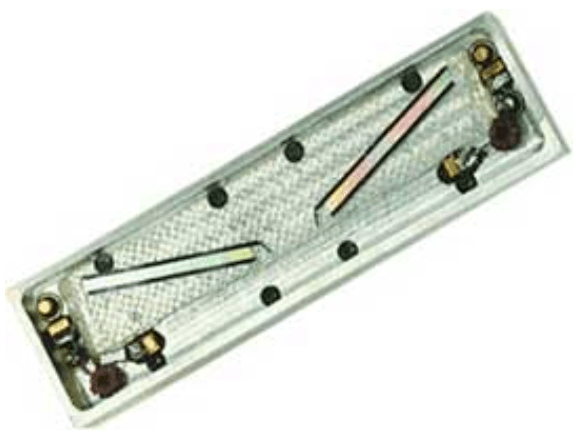
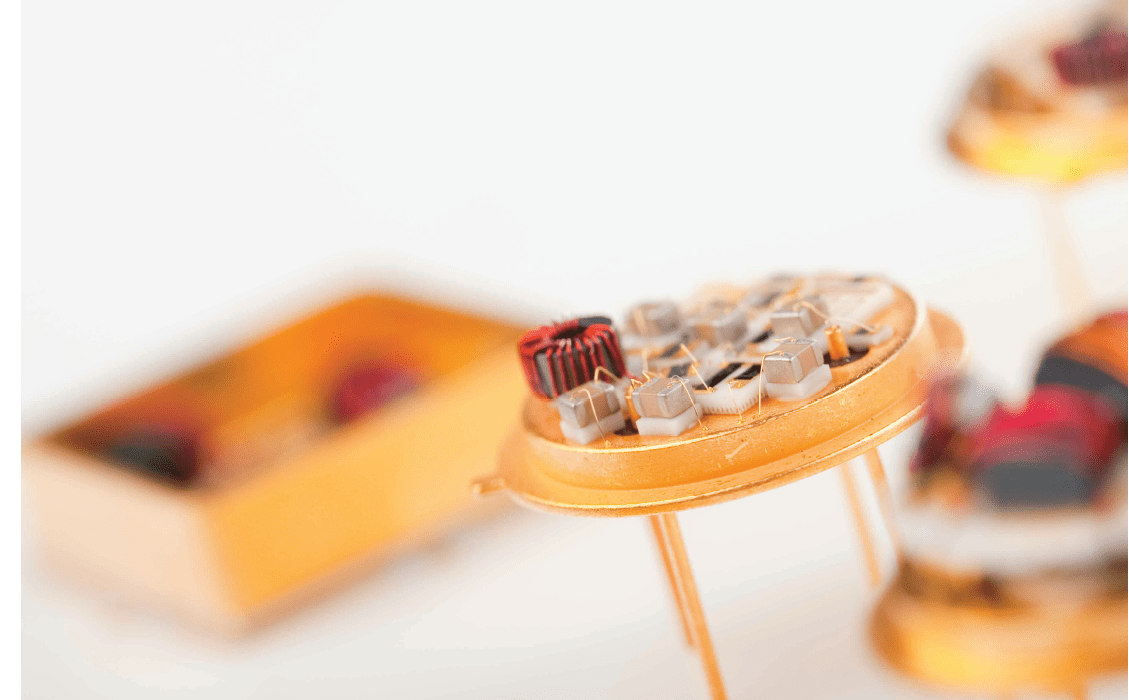
Consider a drone conducting reconnaissance in a contested area or an autonomous harvester navigating with sub-inch precision on a farm. Both scenarios require high signal clarity. Knowles’ high-Q ceramic filters, like the GPS L1, are engineered for use in L-band GNSS applications. These filters demonstrate low passband insertion loss (<2.0 dB), high out-of-band rejection (up to 40 dB), and compact dimensions, making them ideal for both portable and embedded systems.
As GNSS technologies become more deeply embedded in critical infrastructure, the need for high-performance filtering solutions increases. High-Q ceramic filters from Knowles are an important tool for establishing precise signal control and jamming resistance.
See the GPS L1 filter datasheet below for detailed specifications.

your
local specialist
for